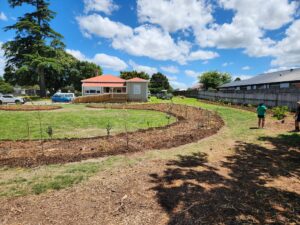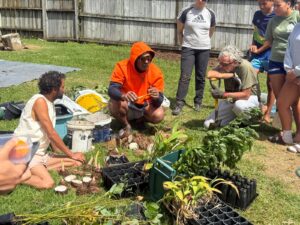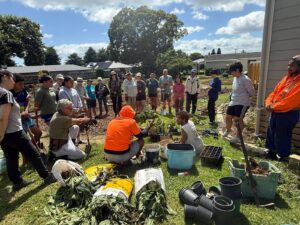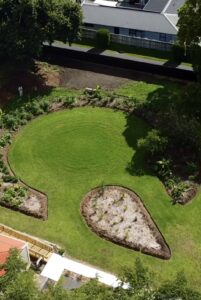
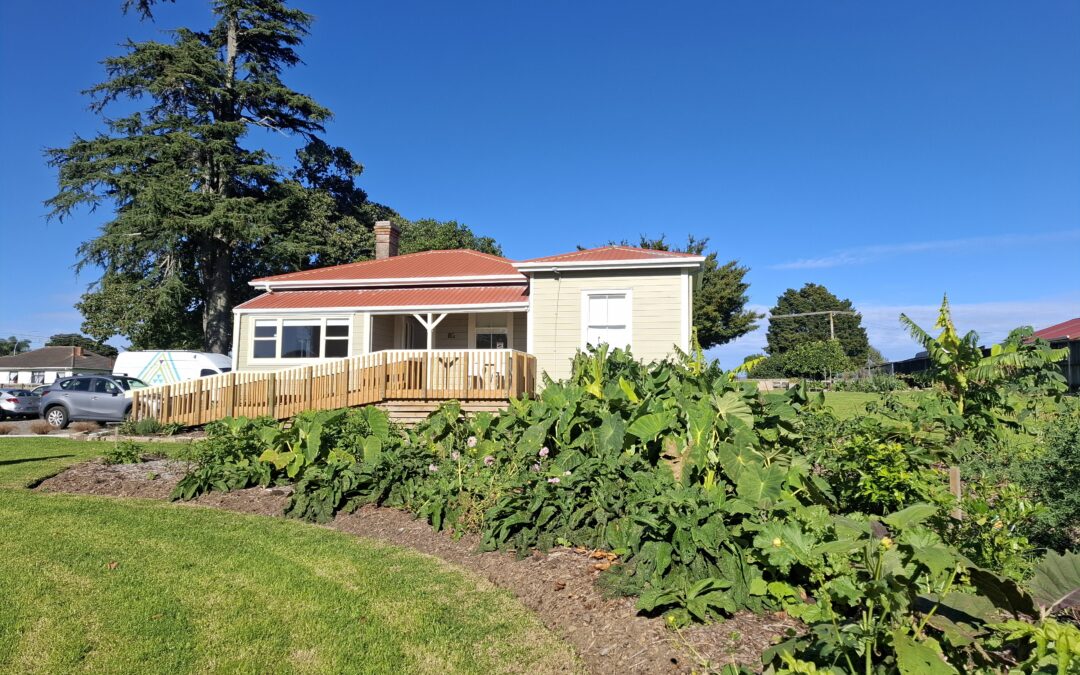
After nearly a year of dreaming, planning, learning, and steady determination, the Food Forest at Ngāti Kahu Hauora came to life in December 2025.
This wasn’t a rushed project or a quick install. A lot of thought went into the lay out and it was the result of shared vision and collaboration. Leading the installation was Kane Tebby of Lets Grow Home, bringing the practical expertise. Alongside him stood Reweti, General Manager of Ngāti Kahu Hauora, holding the long-term vision for the people and the whenua. And lead designer Billy Roy (Billy Mushroom) who contributed extensive knowledge, hands-on experience, and even plant cuttings that now form part of the forest itself.
At the heart of the food forest is a simple but powerful idea: mimic the structure of a natural ecosystem. The design follows seven distinct layers, each playing a role in creating a resilient, self-sustaining environment. These layers include tall canopy trees, smaller understory trees, shrubs, herbs, vines, ground covers, and root crops. Together, they form a living system where plants support one another, reduce maintenance needs, and maximise productivity.
Walking through the space, you’ll notice a strong presence of bananas and taro, plants well-suited to the local climate and deeply connected to food traditions. But the diversity doesn’t stop there. Citrus, apples, figs, olives, tamarillos, peaches, and more are woven throughout the landscape, creating both abundance and resilience.
One of the key principles behind the forest is that you’re not just growing food, you’re growing soil. This is where the practice of “chop and drop” comes in. Certain plants are intentionally included not for harvest, but for what they give back to the land. They are cut down and left in place, returning nutrients to the soil, improving structure, and feeding the ecosystem from the ground up.
A standout example at Ngāti Kahu Hauora is tithonia, also known as Mexican sunflower. It was chosen for its rapid growth and ability to produce large amounts of biomass. Rich in nitrogen, it plays a crucial role in building soil fertility while also providing shelter and shade for more delicate plants nearby.
The result is more than just a garden. It’s a living system designed to nourish people, regenerate the land, and grow stronger with time. A reflection of the values and vision that brought it into being.